A Guide to Flow Racking
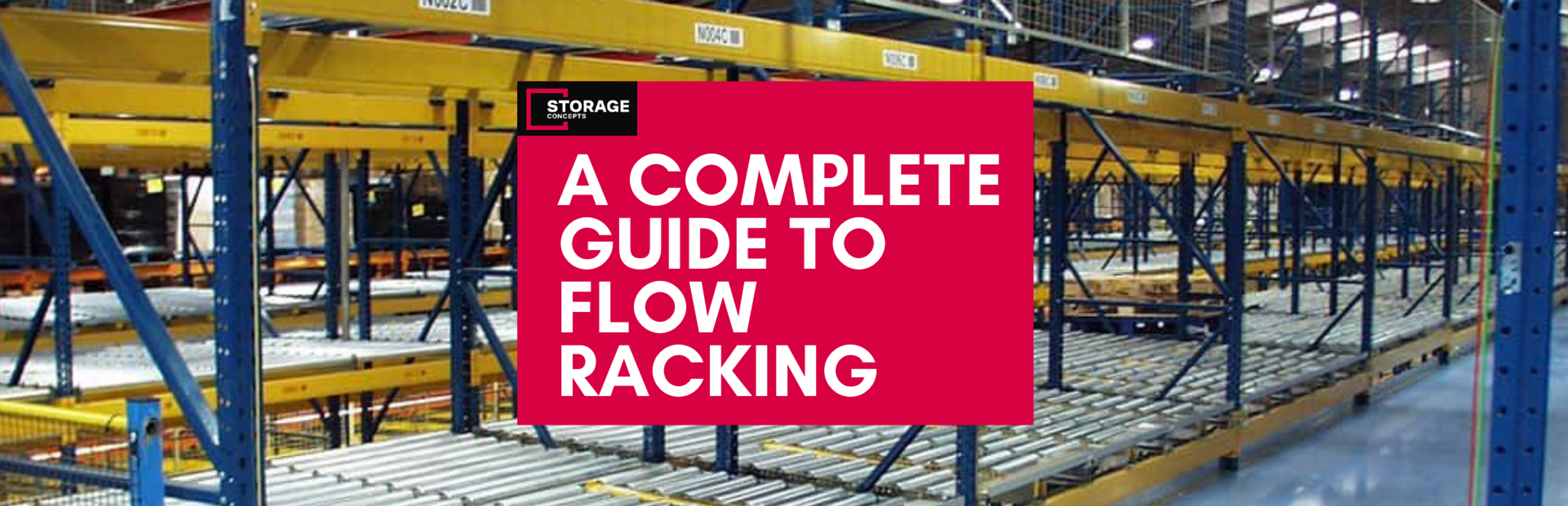
A flow racking system is rapidly becoming the benchmark for high-efficiency, high-volume storage in modern warehouses. It’s a gravity-fed storage system, built with slightly inclined lanes with rollers down each side. This design automatically transports stock from the loading face to the picking face.
This mechanism is engineered to implement the FIFO (First In, First Out) principle. This isn't just the best practice: it's essential to ensure that the oldest stock is always the first out, which is non-negotiable for date-sensitive inventory. This dynamic approach is incomparable to static pallet racking, which requires manual pallet movement and is typically better suited for storing a wider variety of mixed SKUs or slower-moving products.
Key Takeaways
Flow racking is a powerful tool for optimising your warehouse, delivering performance advantages over traditional systems:
- It utilises gravity-fed rollers to move products automatically, drastically cutting down on manual handling and intervention.
- It provides guaranteed, strict adherence to the FIFO stock rotation method.
- It’s a high-density solution that frees up valuable floor space by requiring far fewer working aisles.
- It's the preferred method for high-throughput environments across food & beverage, pharmaceutical, and large-scale fulfilment sectors.
Key Benefits of Flow Racking Systems
Efficient Stock Rotation (FIFO)
The gravity-driven flow ensures that the moment a pallet is picked, the next one rolls forward - always presenting the oldest stock first. FIFO management is vital for two key operational areas:
- Perishable and Date-Sensitive Goods: It actively minimises product spoilage and waste for items with a limited shelf life.
- Compliance and Quality Control: It ensures you meet regulatory standards for expiry date management, protecting product quality and your business reputation.
Improved Warehouse Space Utilisation
One of the most apparent benefits of flow racking is the space it saves. By enabling deep-lane storage, the system significantly reduces the required number of working aisles compared to selective pallet racking.
- This results in a much higher storage density within the same footprint.
- It allows you to dramatically increase your overall storage capacity without the costly, time-consuming process of expanding your facility.
Faster Picking & Reduced Labour
Flow racking separates the loading process from the picking process, meaning pickers only work from one face as the product is gravity fed to them:
- Travel time is minimised for picking staff and lift trucks.
- The system reduces manual handling, improving the overall speed and accuracy of the pick.
- This delivers a noticeable improvement in throughput for high-volume, repetitive operations.
Better Inventory Visibility & Control
Operating from a single picking face gives your team clear, uninterrupted visibility into the inventory within the lane.
- Stock monitoring becomes easier and far more consistent.
- The streamlined process reduces search time and cuts down on frustrating picking errors.
This is why flow racking is a core component of many large-scale fulfilment and e-commerce operations where high-speed, flawless picking is critical.
Improved Safety and Ergonomics
An often-overlooked advantage is improved safety. The separation of loading and picking aisles significantly reduces forklift traffic and congestion in the active picking zones, which is a major safety benefit. For carton flow systems, the design can also be tailored to present items at an ideal height, actively improving ergonomic conditions and reducing strain from bending or reaching.
Types of Flow Racking
Pallet Flow Racking
- Designed for: Full, heavy pallets.
- Mechanism: Uses robust, inclined lanes and heavy-duty rollers to move entire pallet loads.
- Best For: Bulk storage, staging areas, and high output distribution centres where strict FIFO of full pallets is needed.
Carton Flow Racking
- Designed for: Individual cases, plastic totes, or single items (piece picking).
- Mechanism: Uses lighter-duty rollers, perfect for smaller unit loads.
- Best For: E-commerce order fulfilment, fast-moving consumer goods (FMCG), and assembly lines requiring high-speed, accurate picking.
Push-Back Racking (LIFO)
While not a FIFO flow system, push-back racking is a popular high-density solution often discussed alongside flow racking:
- Mechanism: Pallets are loaded and unloaded from a single aisle, with the new pallet "pushing back" the existing pallets on a series of inclined carts or rails.
- Stock Rotation: Operates on a LIFO (Last-In, First-Out) basis.
- Suitability: Excellent for non-date-sensitive, high-volume products or when you need to maximise density from a single operating aisle.
Ideal Applications for Flow Racking
Flow racking is the perfect fit for environments that demand speed, maximum density, and stock rotation. These applications include:
- Food & Beverage Warehouses: To manage perishable goods and guarantee product freshness for consumers.
- Pharmaceutical Storage: Where compliance and managing strict expiry dates are essential.
- Cold Storage Environments: To maximise the cubic efficiency of costly, temperature-controlled space.
- E-commerce and Order Fulfilment: For fast, precise picking of cases and items to meet tight shipping deadlines.
Ultimately, flow racking is a solution for any operation where speed, stock rotation, and space efficiency are the critical drivers of overall warehouse success.
Pallet Flow Racking vs Push-Back Racking
| Feature | Pallet Flow Racking | Push-back Racking |
|---|---|---|
| Stock Rotation | FIFO (First-In, First-Out). The oldest stock is picked first. | LIFO (Last-In, First-Out). The last pallet loaded is the first one available. |
| Picking & Loading Faces | Single aisle for loading and picking. Pallets are loaded from one side and retrieved from the other. | Single aisle for both loading and picking. Pallets are loaded and retrieved from the same face. |
| Typical Use Cases | Perishable, date-sensitive products, pharmaceuticals, and operations where stock rotation is critical for compliance or quality. | High-volume, non-date-sensitive products, or goods with long shelf lives. |
| When it Makes Sense | When you require strict inventory rotation (FIFO) and benefit from separating loading and picking traffic for improved safety and efficiency. | When maximum density is the primary goal, a single-aisle operation is preferred, but strict FIFO is not essential. |
As a dynamic component, flow racking can dramatically upgrade the performance of a broader pallet racking solution. It offers a combination of high density, operational speed, and guaranteed FIFO stock rotation that is unmatched by static storage systems.
To take the next step and determine if a flow racking system is the right investment for your business, we encourage you to assess the following core factors:
- Product Type: Are your items perishable or particularly time-sensitive?
- Stock Rotation Needs: Is strict FIFO essential for maintaining your quality standards and compliance?
- Warehouse Layout: Do you need to extract every possible unit of storage capacity from your existing footprint?
Ready to see how dynamic storage can transform your operations? Get in touch or view our pallet racking page.
Arrange a consultation
Contact us today to arrange a free, no obligation consultation.
Book a consultation